Paint Correction in Derby

Machine polishing that removes swirl marks, scratches and haze from the clear coat, and brings back the depth and clarity the paint had when it was new.

What's actually wrong with the paint

Modern cars have a clear lacquer over the colour. Almost every mark you see in sunlight β€” swirls, spider-webbing, fine scratches, dullness β€” is damage to that clear coat, mostly from washing: sponges, drive-through brushes, dirty cloths and grit dragged across the panel.

Swirl marks are the circular scratches you see around a light source. Haze is a milky dullness that flattens the colour. Holograms are buffer trails left by rushed machine work, usually at a bodyshop or dealer.

Correction levels the surface of the clear coat with a machine polisher and progressively finer compounds, so the defects are removed rather than hidden. Because it removes a very thin layer of lacquer, paint depth is measured first and monitored throughout.

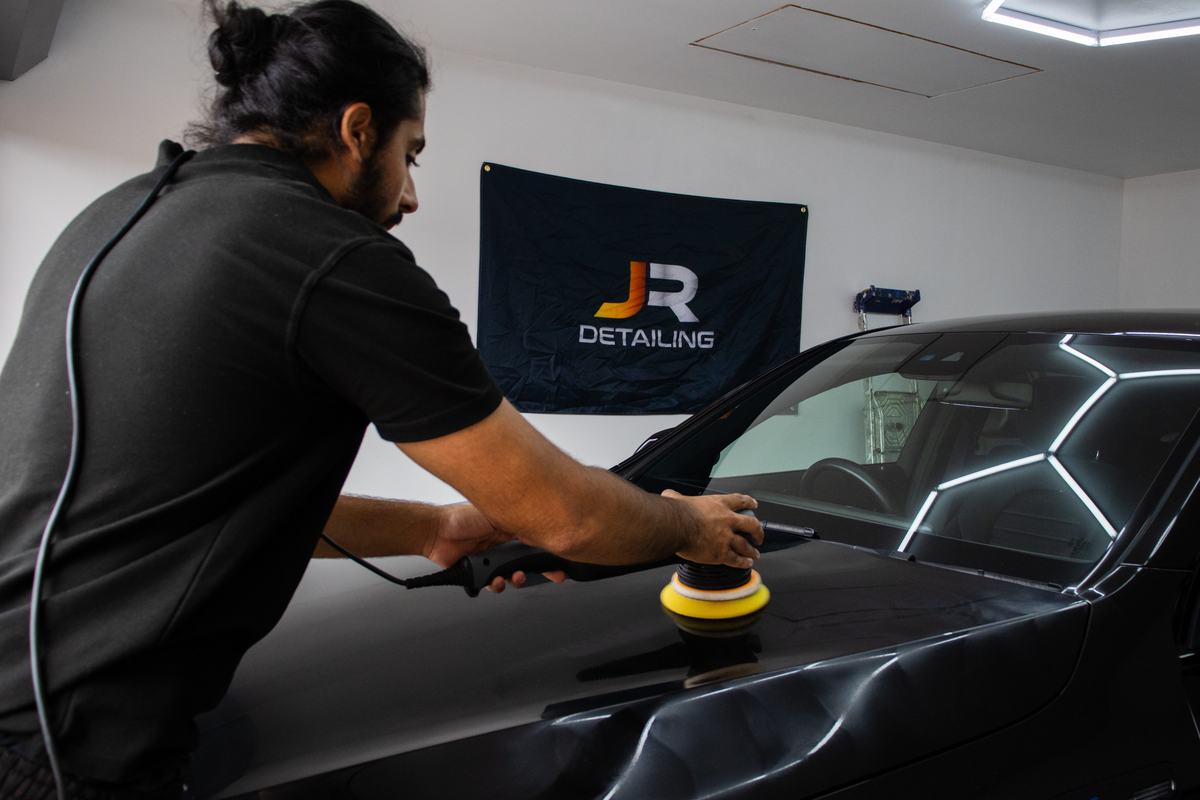
Machine polishing in the unit

Choose the right level

Three options. The right one depends on how marked the paint is and how far you want to go β€” not on how new or expensive the car is. All three include a free 2-year wheel ceramic coating.

Click a package to see prices and what's included

Stage One Paint Correction

The most popular choice for daily-driven cars with swirl marks, wash marring and light scratches. A refining polish that removes the majority of light defects and restores clarity.

  • Small vehiclee.g. Fiesta, Polo, A-ClassΒ£300
  • Large vehiclee.g. SUV, 4x4, estateΒ£350
  • Safe wash, iron and tar decontamination, clay treatment
  • Single-stage correction with a refining polish
  • Paint depth measured before and during correction
  • Free 2-year wheel ceramic coating on all four wheels

Won't fully remove deep scratches you can catch a fingernail in, or stone chips. Stage Two goes further on heavier defects.

Add a ceramic coating

  • 2-year coating+ Β£150
  • 3-year coating+ Β£175
  • 4–5-year coating+ Β£200
  • 7-year coating+ Β£250

Applied straight after correction. How coatings work.
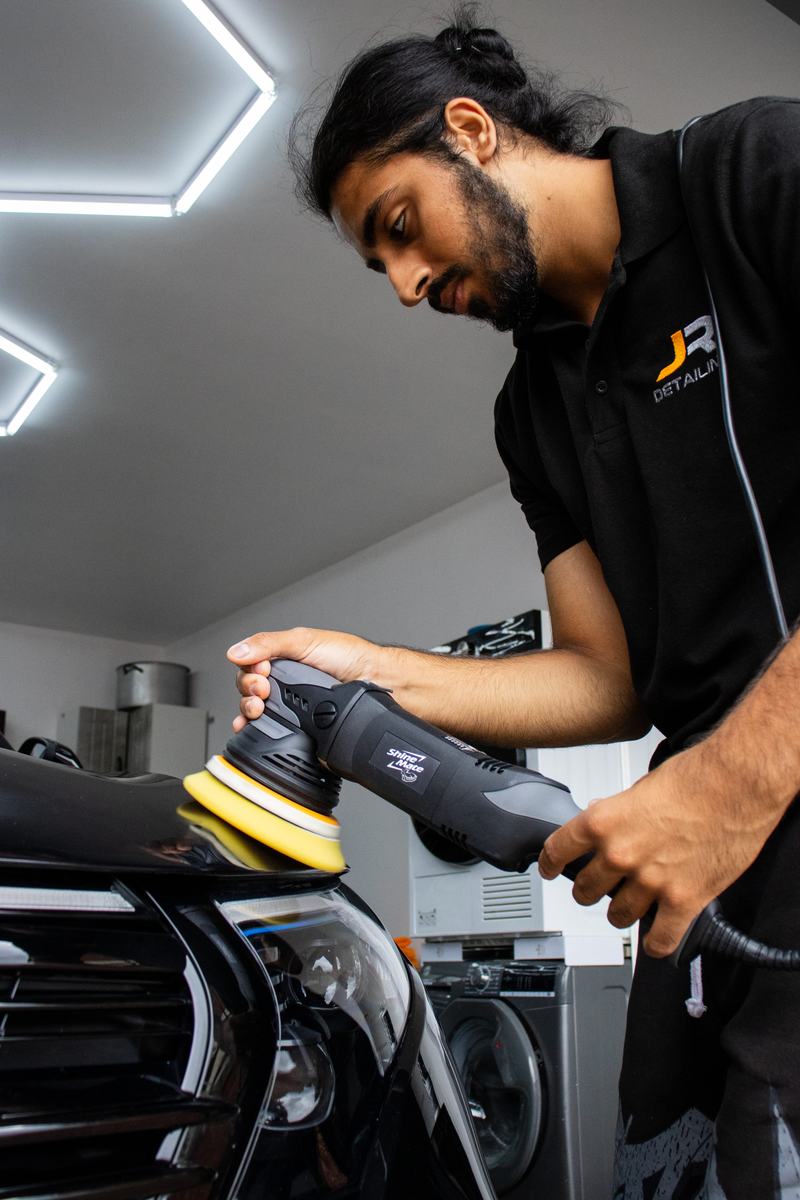
Stage One paint correction β€” machine polishing a headlight surround

Adding a ceramic coating. Correction is the ideal time to coat, because the coating locks in freshly corrected paint. With Gloss Enhancement or Stage One, coatings are add-ons from Β£150; Stage Two includes the 7-year coating. See the options.

What correction can and can't do

It can remove swirl marks, light-to-moderate scratches, water spotting, oxidation and haze, and it can restore a level of gloss that washing and waxing never will.

It cannot repair anything that goes through the clear coat. Stone chips, deep key scratches, cracked or flaking paint, dents and failed lacquer all need bodywork. If a scratch catches your fingernail, it's usually too deep to polish out safely β€” we'll tell you that up front rather than chase it and thin the paint.

The "defects removed" figures on each package are a guide from typical jobs, not a promise β€” every car's paint is different. We look at it, measure it, and tell you what's realistic before starting.

Paint correction questions

How long does it take?

Depends on the level and the size of the car. Gloss Enhancement is typically a day's work; Stage Two is several days. We'll confirm a timescale when we've seen the paint.

Is it safe for my paint?

Yes, when it's measured. Paint depth is checked before and during correction so we know exactly how much lacquer is there and never take more than is safe.

Will the swirls come back?

Only if they're put back in. Corrected paint that's washed with a safe two-bucket method and clean mitts stays clear. A ceramic coating makes this easier.

Can you do just one panel?

Ask. Single-panel work is possible for a specific mark, but a full-car correction gives a consistent finish.

Do I need Stage Two?

Most daily-driven cars are best served by Stage One. Stage Two is for heavier defects, holograms, or when you want the closest thing to a new-car finish β€” and it comes with the 7-year coating.